
How Much Is a Synthetic Oil Change
Engine care remains vital for every driver. A full synthetic oil change delivers top protection. It keeps engines running smoothly under tough conditions. Many wonder, "how much is a full synthetic oil change?" This guide breaks it down simply.Hands-on experience from thousands of services shows the difference. Fresh synthetic oil boosts performance daily.
.png)
What Is an Oil Change and Why It Matters
An oil change refreshes the lifeblood of the engine. Oil lubricates moving parts effectively. It reduces friction and controls heat buildup. Dirty oil loses these essential properties quickly.
Thousands of oil changes occur yearly across shops. Fresh oil improves fuel economy noticeably. It minimizes wear on pistons and valves. Neglect leads to sludge accumulation. This damages performance and reduces mileage.
Regular service prevents unexpected breakdowns. It extends engine life significantly. Technicians check oil levels at each visit. Early detection of issues proves invaluable. Reliable engine oil maintenance keeps vehicles performing optimally.
Step-by-Step Guide to What Happens During an Oil Change
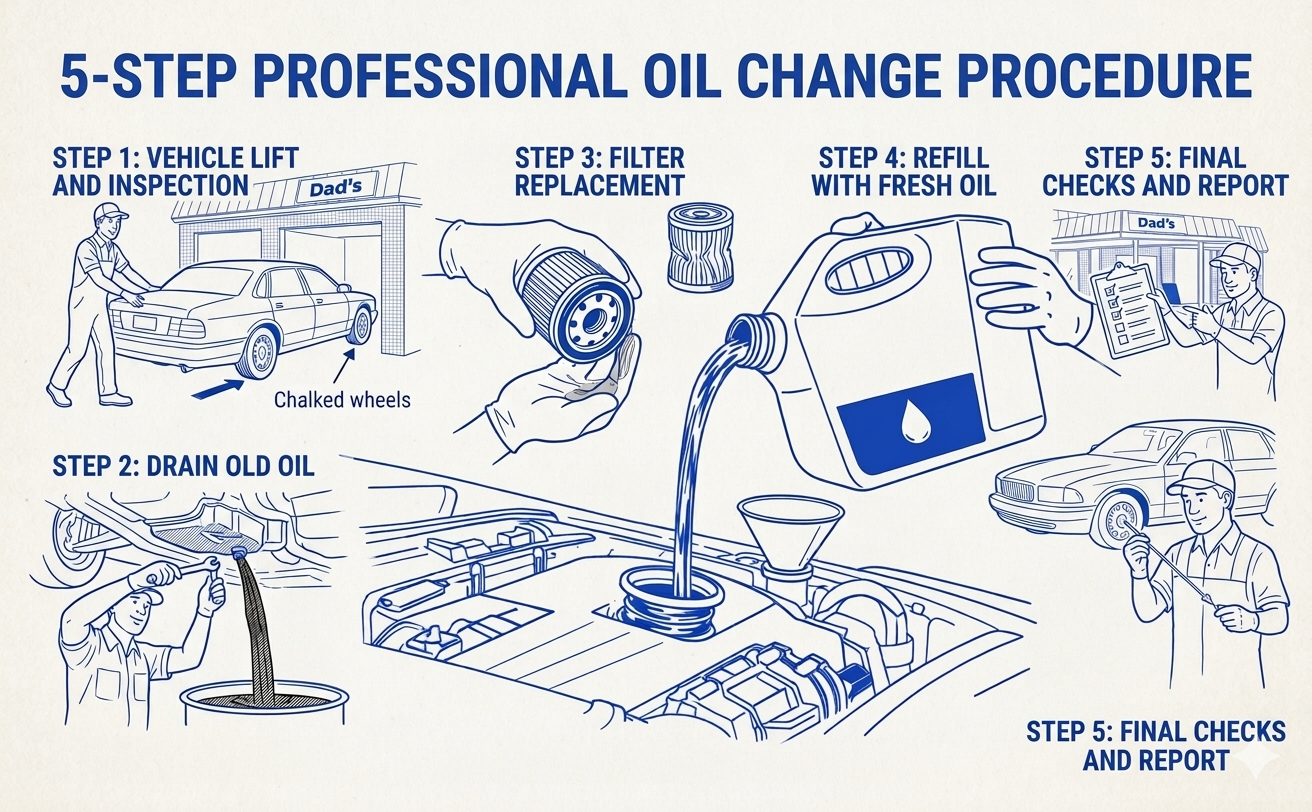
The process follows precision steps for optimal results. ASE-certified technicians prioritize safety, quality, and vehicle health throughout. Here's the standard procedure:
- Vehicle lift and inspection: Elevate the car safely on certified lifts. Inspect belts, hoses, fluids, brakes, and tires thoroughly. Early detection prevents costly future repairs.
- Drain old oil: Remove all used oil completely from the sump. Leftover residue contaminates fresh oil and reduces performance. Proper drainage protects engine components.
- Filter replacement: Install a new, high-quality oil filter every time. This guarantees clean oil circulation to all moving parts effectively.
- Refill with fresh oil: Add the precise grade and quantity specified for the engine. Double-check pressure and levels to prevent overfill or shortages.
- Final checks and report: Lower the vehicle, clean any drips, and perform system tests. Provide a detailed service report with findings and recommendations.
This methodical approach ensures reliability. Explore full synthetic oil change options for enhanced protection.
Types of Oil Change Services
Tailored oil change services meet every driver's needs. Each option aligns with driving style, vehicle type, and budget. ASE-certified technicians recommend the best match for engine demands. Here's the breakdown:
Superior Cold Flow
Starts flowing instantly in freezing temperatures. Reduces startup wear significantly compared to conventional oils. Ideal for winter starts or cold climates.
Superior Cold Flow
Starts flowing instantly in freezing temperatures. Reduces startup wear significantly compared to conventional oils. Ideal for winter starts or cold climates.
Superior Cold Flow 3
Starts flowing instantly in freezing temperatures. Reduces startup wear significantly compared to conventional oils. Ideal for winter starts or cold climates.
Superior Cold Flow 4
Starts flowing instantly in freezing temperatures. Reduces startup wear significantly compared to conventional oils. Ideal for winter starts or cold climates.
Ready to schedule?
Book your $88 synthetic oil change online — no surprises.
Benefits of Choosing Full Synthetic Oil
A full synthetic oil change outperforms others in demanding conditions. It provides unmatched protection for modern engines. Technicians recommend it for superior longevity and performance. Here's why it stands out:
Superior Cold Flow
Starts flowing instantly in freezing temperatures. Reduces startup wear significantly compared to conventional oils. Ideal for winter starts or cold climates.
Superior Cold Flow
Starts flowing instantly in freezing temperatures. Reduces startup wear significantly compared to conventional oils. Ideal for winter starts or cold climates.
Superior Cold Flow
Starts flowing instantly in freezing temperatures. Reduces startup wear significantly compared to conventional oils. Ideal for winter starts or cold climates.
Superior Cold Flow
Starts flowing instantly in freezing temperatures. Reduces startup wear significantly compared to conventional oils. Ideal for winter starts or cold climates.
Superior Cold Flow
Starts flowing instantly in freezing temperatures. Reduces startup wear significantly compared to conventional oils. Ideal for winter starts or cold climates.
Superior Cold Flow
Starts flowing instantly in freezing temperatures. Reduces startup wear significantly compared to conventional oils. Ideal for winter starts or cold climates.
DIY vs. Professional Oil Change: Pros & Cons
Professional pros
DIY cons
Experts select exact oil specifications for optimal performance
Experts select exact oil specifications for optimal performance
Experts select exact oil specifications for optimal performance
Experts select exact oil specifications for optimal performance
Experts select exact oil specifications for optimal performance
Experts select exact oil specifications for optimal performance
Experts select exact oil specifications for optimal performance
Experts select exact oil specifications for optimal performance
Oil Change Cost Breakdown: What to Expect
Costs vary based on several key factors. Oil type remains the primary driver of pricing.
Full synthetic oil costs more per quart due to premium formulation. Typical totals range from $70-$120. Fewer service visits offset the higher upfront expense. How much is a full synthetic oil change depends on vehicle specifics and local rates.
Labor fees stay reasonable for quick procedures. Filters contribute $10-$20 to the total. Disposal fees integrate seamlessly into the quoted price.
Oil change coupons and bundled packages reduce costs effectively. Larger vehicles like trucks require more oil. Quick lube oil change options accelerate service. View compare conventional vs synthetic oil for smart value comparisons. Regional pricing influences final quotes.